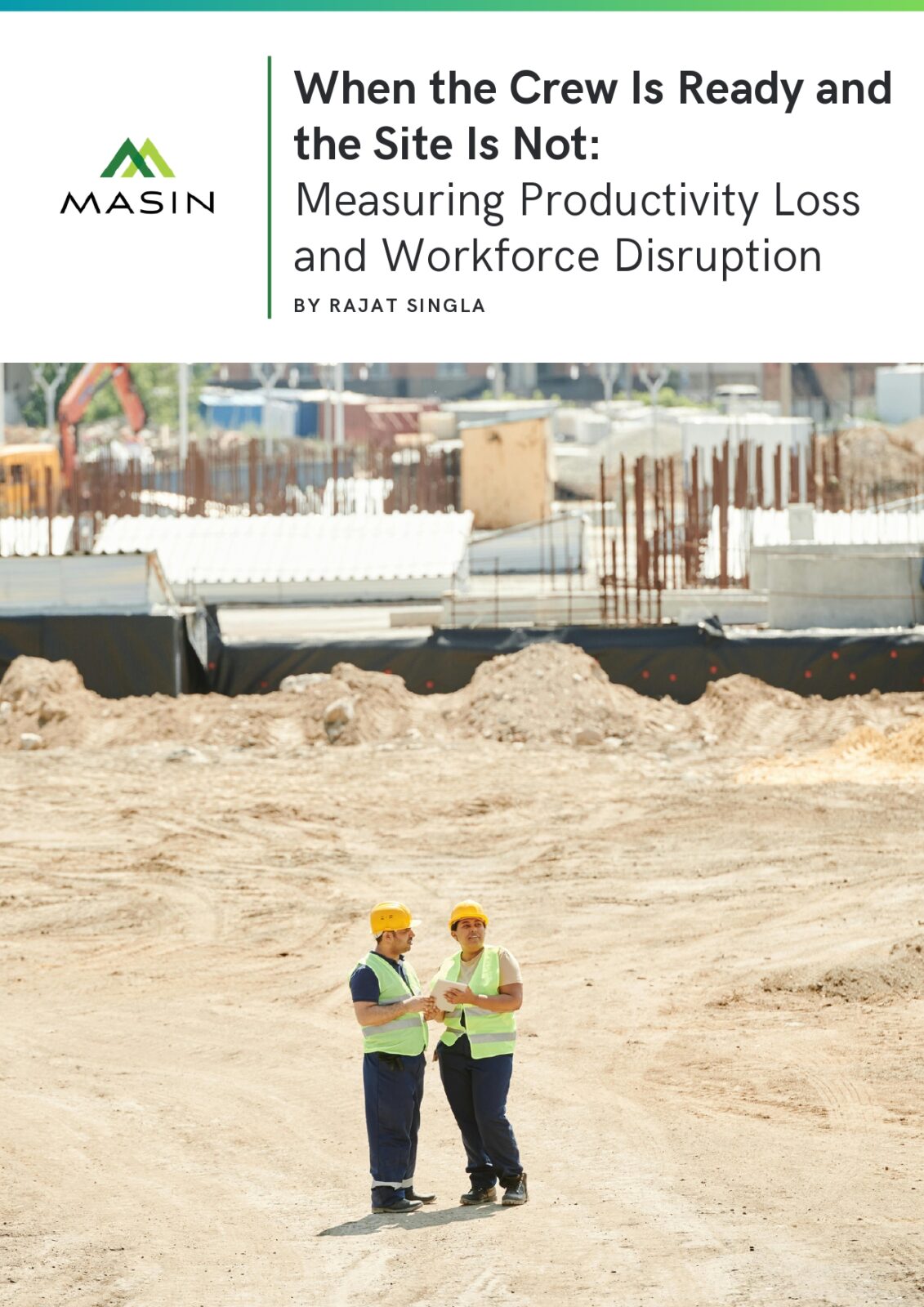
When the Crew Is Ready and the Site Is Not: Measuring Productivity Loss and Workforce Disruption
When Productivity Suffers Before the Delay Appears
This article explores how construction projects can suffer significant productivity losses even when delays are not immediately visible. It distinguishes between supply chain disruption and workforce disruption, explaining how idle labour, resequencing, substitute materials, and repeated interruptions can reduce output and create recoverable claims. The piece also highlights the importance of contemporaneous records, measured mile analysis, and structured documentation in proving productivity loss and disruption-related damages on complex construction projects.
Frequently Asked Questions
Get answers to frequently asked questions about everything we do.
What is the difference between supply chain disruption and workforce disruption?
Supply chain disruption relates to delays or changes in materials, logistics, or procurement, while workforce disruption refers to reduced labour efficiency caused by idle time, resequencing, rework, or disrupted working conditions.
Can a contractor claim productivity loss even if there is no project delay?
Yes. Productivity loss can arise independently of critical path delay, especially where substitute materials, repeated interruptions, or inefficient working conditions reduce output per man-hour.
What is the “Measured Mile” method in disruption claims?
The Measured Mile method compares productivity achieved during an unimpacted period against productivity during the impacted period to quantify labour inefficiency and recoverable loss.
Why are contemporaneous records important in disruption claims?
Daily logs, output records, manpower reports, and programme updates help establish causation and quantify losses accurately. Without timely records, proving disruption-related claims becomes significantly more difficult.
How should contractors deal with multiple overlapping disruptions on a project?
Each disruption event should be analysed and documented separately, with distinct cause-and-effect links, methodologies, and claim structures to avoid unsupported or overly broad claims.