
Wars, Sanctions and Construction Claims: Delay, Force Majeure, and Entitlement in Disrupted Project
Navigating War, Sanctions, and Construction Claims in a Disrupted Global Landscape
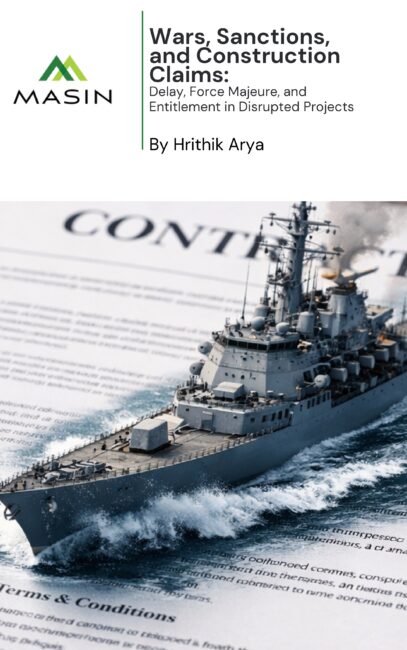
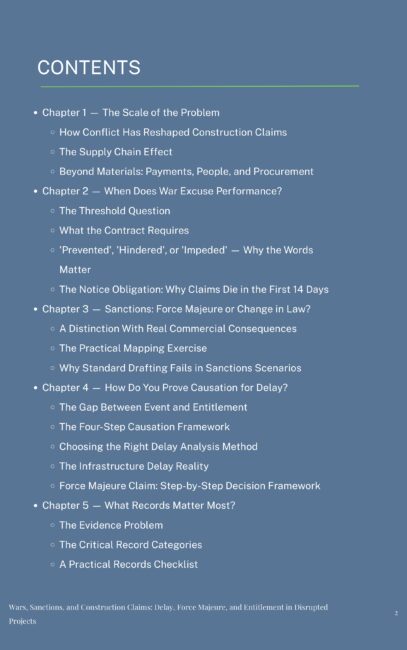
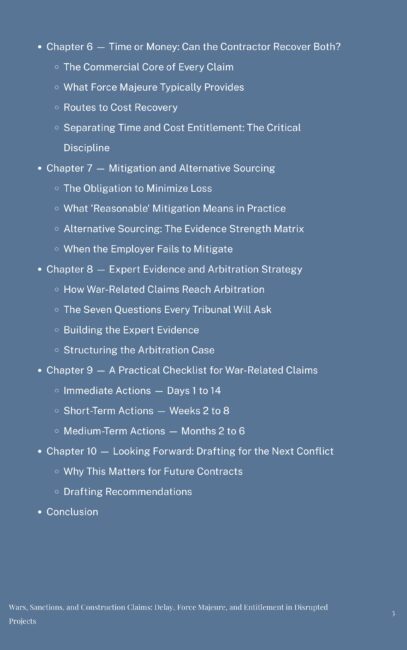
This eBook explores how wars, sanctions, and geopolitical disruptions are reshaping construction projects and arbitration claims worldwide. It examines the growing impact of supply chain failures, material price escalation, banking restrictions, and labour shortages on project delivery and contractual performance. The guide explains how force majeure, change-in-law provisions, delay causation, mitigation obligations, and entitlement to time or cost recovery are analysed under international construction contracts, particularly FIDIC frameworks. It also highlights the importance of contemporaneous records, strategic delay analysis, and expert evidence in arbitration proceedings. Through practical frameworks, real-world examples, and drafting recommendations, the publication provides contractors, employers, and legal professionals with a structured approach to managing and resolving war-related construction disputes effectively.
Frequently Asked Questions
Get answers to frequently asked questions about everything we do.
Can war or sanctions qualify as force majeure under construction contracts?
Yes, but only if the contract specifically allows it and the event meets the required contractual thresholds such as preventing, hindering, or impeding performance.
Can contractors recover both time and cost for war-related disruptions?
Not always. Most standard contracts allow Extension of Time (EOT), but recovery of additional costs depends on clauses such as change in law, price escalation, or variations.
Why are notice requirements critical in war-related claims?
Failure to issue contractual notices within the required timeframe can result in the loss of entitlement, even where the underlying disruption is genuine and substantial.
What type of evidence is most important in sanctions and delay disputes?
Contemporaneous records such as supplier correspondence, procurement logs, updated programmes, payment records, and mitigation efforts are often decisive in arbitration.
How can contractors mitigate risks arising from geopolitical disruptions?
Contractors should assess alternative sourcing, maintain detailed records, engage early with employers, and ensure contracts include clear provisions for sanctions, price escalation, and force majeure events.